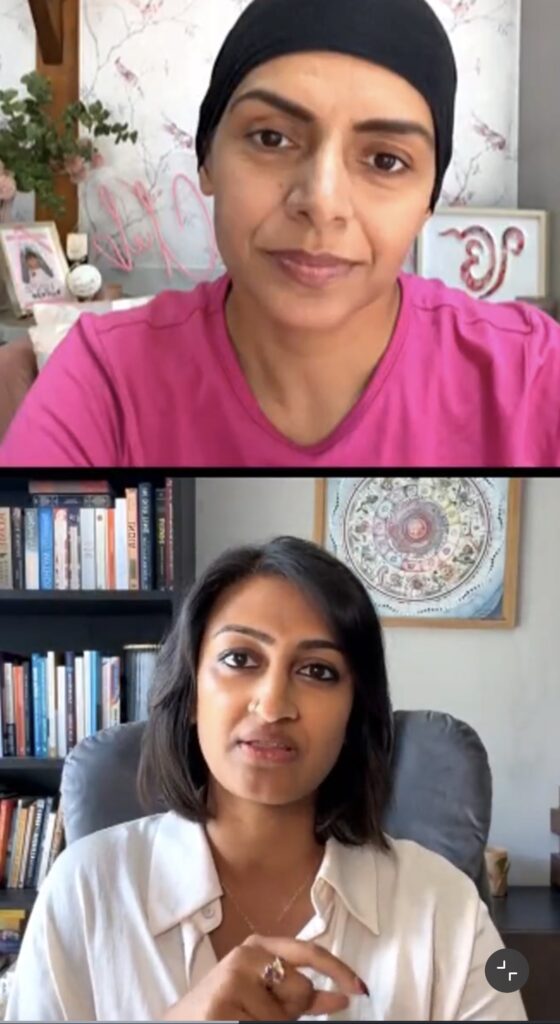
This week, I hosted a really powerful Instagram Live with Nisha around self-trust, emotional patterns, overthinking and why so many high-functioning women still feel stuck internally despite appearing confident on the outside.
It was one of those conversations that stayed with me long after the live ended because so much of what we discussed felt deeply relevant to the experiences of many South Asian women.
One of the biggest moments Nisha shared was this:
Awareness is not the same as implementation.
So many women today are incredibly self-aware. They’ve read the books, listened to the podcasts, gone to therapy, learned about nervous systems, attachment styles and emotional triggers. Intellectually, they understand themselves deeply. But despite all of this awareness, they still find themselves repeating the same emotional patterns.
They still overthink decisions. They still people-please. They still seek reassurance before trusting their own instincts. They still abandon their own needs in order to keep the peace or avoid disappointing others.
That distinction between awareness and implementation really struck me because I think this is where many women quietly remain stuck.
Understanding your patterns is important, but real transformation happens when you begin responding differently in everyday life. It’s one thing to know you struggle with boundaries. It’s another thing entirely to actually say no without guilt. It’s one thing to understand that you seek external validation. It’s another to trust yourself enough to stop constantly asking others for reassurance.
Implementation often looks much less dramatic than people expect. It looks like setting the boundary. Trusting your instincts. Speaking up in the moment. Choosing yourself without overexplaining. Allowing yourself to be visible without shrinking to make others comfortable.
As South Asian women in particular, many of us were raised with strong messages around responsibility, achievement and being “good.” We were encouraged to succeed, make our families proud and be dependable, but often within very specific boundaries around visibility, expression and identity.
That conditioning doesn’t just disappear because we become successful adults.
I actually reflected on this recently after doing my branding shoot. Even after years of speaking publicly, building businesses and showing up online, there were still moments where I felt uncomfortable being fully seen. Not because I lack confidence, but because for many women visibility has historically been linked to criticism, judgment or emotional unsafety.
Sometimes playing small isn’t self-sabotage. Sometimes it’s protection.
That line alone reframed so much for me.
It also made me think about how often women disconnect from themselves in subtle ways every single day. Self-abandonment doesn’t always look dramatic. Sometimes it’s saying yes when you mean no. Staying quiet when something doesn’t feel right. Ignoring your own exhaustion. Continuing to carry everyone else’s emotional needs while neglecting your own.
Over time, those patterns create emotional overwhelm, anxiety, burnout and a growing disconnect from yourself.
And perhaps the biggest hidden cost of all is a life unlived.
Not because women aren’t capable or ambitious, but because fear, overthinking, self-doubt and people-pleasing quietly shape their decisions for years.
This is why I connected so deeply with Nisha’s work around self-trust, emotional healing and personal growth for women. Her approach goes beyond surface-level confidence advice and focuses on helping women understand their emotional patterns while also implementing real change in their lives.
Through both the masterclasses she delivered inside Inspire Club and our Instagram Live together, what really stood out to me was how empathetic, grounded and knowledgeable she is. She has a real ability to help women feel seen while also gently challenging them to move differently.
Her Self-Trust Programme is designed for women who are tired of simply understanding their patterns intellectually and are ready to start building genuine self-trust, emotional resilience and healthier ways of relating to themselves and others.
For women who constantly overthink, struggle with people-pleasing, feel emotionally exhausted or find themselves stuck between external success and internal fulfilment, I genuinely believe this work will resonate deeply.
Because confidence isn’t just about mindset.
Often, it’s about finally feeling safe enough to trust yourself.