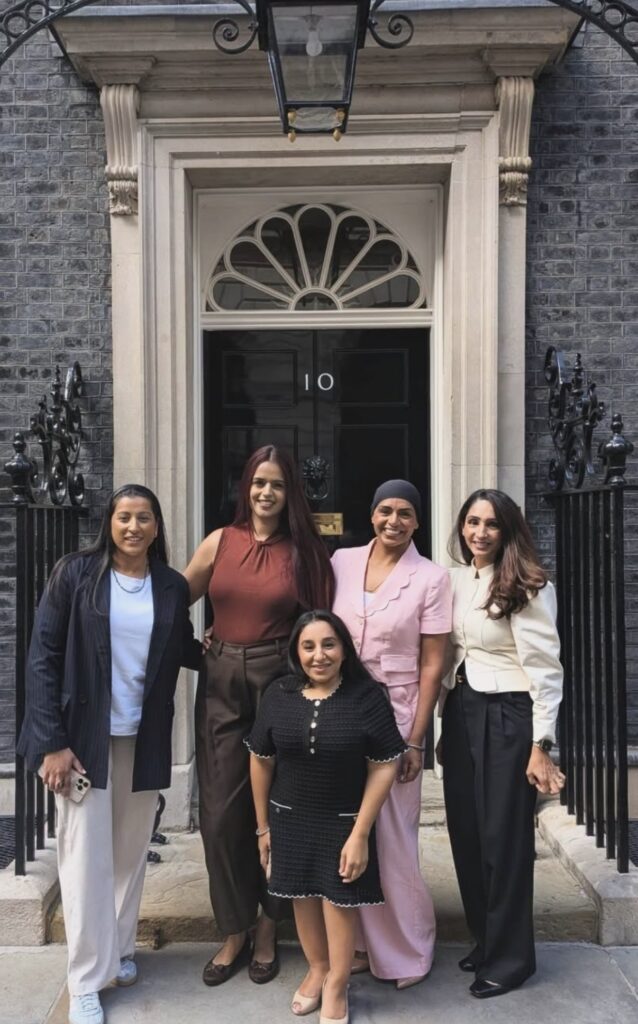
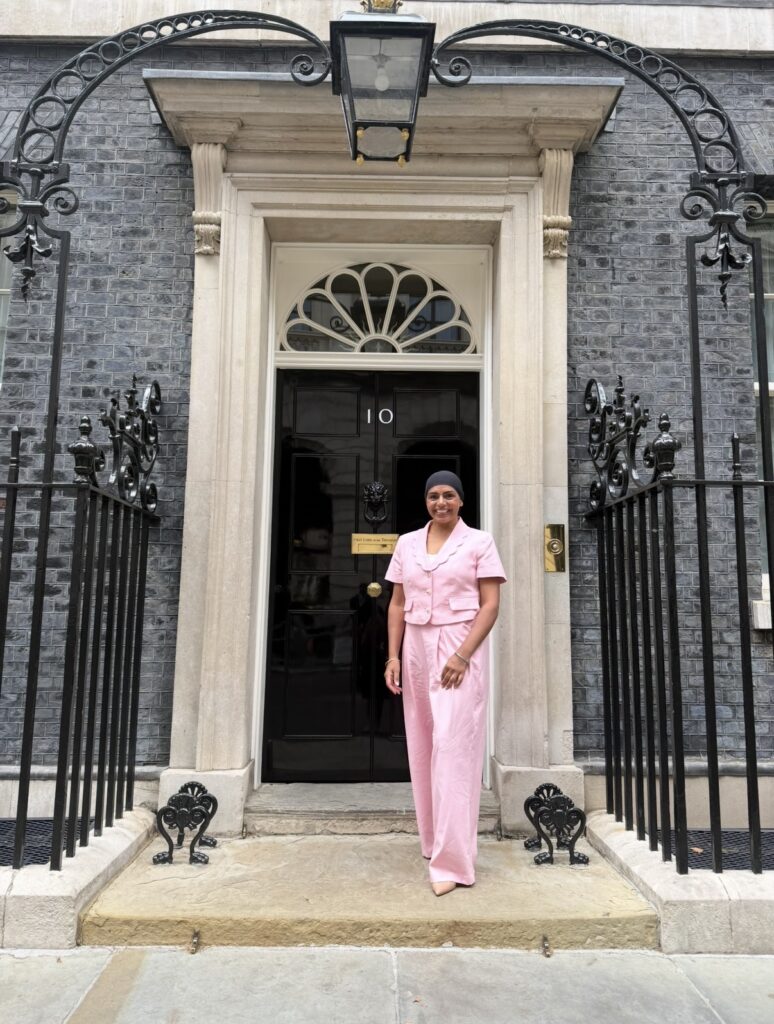
Today, I walked through the doors of 10 Downing Street to take part in an important conversation about the Sikh community in Britain.
It was an incredible opportunity. But if I’m completely honest, imposter syndrome walked in with me.
That familiar voice began asking:
Do I really belong in this room?
Am I qualified enough to contribute?
What if everyone else knows more than I do?
As the founder of Asian Women MEAN Business, I have spent years supporting South Asian women entrepreneurs, professionals and community leaders. Yet imposter syndrome can still appear when I enter a new or influential space.
I reminded myself that I had been invited because of the work I have done, the community we have built and the experiences thousands of women have trusted me with.
I was there to bring those voices into the room.
Supporting South Asian women entrepreneurs in the UK
Asian Women MEAN Business was created to help South Asian women build confidence, increase their visibility, develop their businesses and access opportunities.
Through our community, I regularly speak to ambitious women who are building businesses while also navigating cultural expectations, caring responsibilities, limited professional networks and a lack of access to funding.
Many South Asian women in business have the ideas, talent and determination to succeed. What they often lack is access to the right opportunities, investment and influential networks.
Grassroots organisations play an essential role in closing this gap. They understand the cultural context and have already earned the trust of the communities they support.
But too many of these organisations are expected to create significant change with limited funding, small teams and the goodwill of volunteers.
The contribution of Sikh entrepreneurs to the UK
Our Downing Street conversation also explored the contribution made by Sikh entrepreneurs, professionals and community leaders across Britain.
Sikh-owned businesses have created jobs, supported local economies and contributed to British public life across generations. Sikh values such as hard work, enterprise and seva are visible in businesses, charities, gurdwaras and community projects throughout the UK.
Yet the full economic contribution of Sikh businesses remains under-researched.
The British Sikh Report 2014 estimated the wider Sikh contribution to the British economy at £7.63 billion and reported that 34% of British Sikh families owned a business.
While more recent Census data continues to show strong levels of Sikh entrepreneurship, we still lack a complete and current picture of the turnover, employment, tax contribution and social impact generated by Sikh-owned businesses.
This lack of data matters. If the contribution of a community is not properly measured, it can easily remain invisible when decisions are made about business funding, government contracts and economic policy.
Three ways government can support grassroots organisations and diverse businesses
During my visit, I shared three practical recommendations with government advisers.
1. Fund grassroots organisations developing entrepreneurs
Government and other funders should invest in grassroots organisations already helping South Asian women and other underrepresented entrepreneurs develop their skills, start businesses and scale their work.
These organisations have trusted relationships and a detailed understanding of the barriers facing their communities.
Funding would allow them to reach more people, strengthen their programmes, employ specialist staff and create lasting economic impact.
2. Improve access to government procurement opportunities
Government departments should build strategic partnerships with grassroots organisations and diverse business networks.
These partnerships should include practical support to help smaller businesses understand procurement, become ready to bid and access public sector contracts.
Many government procurement processes are complex and time-consuming. Smaller businesses and community organisations may have the expertise to deliver the work but lack dedicated bid teams or experience of public sector tendering.
Clearer guidance, simpler processes and requirements that are proportionate to the size of each contract would give more South Asian and Sikh entrepreneurs a fair opportunity to compete.
3. Commission better research into Sikh businesses
We need current Sikh-specific research that measures:
- Business ownership and turnover
- Employment and job creation
- Access to business finance
- Participation in government procurement
- Workplace discrimination
- The experiences of Sikh women entrepreneurs
Better data would allow government, financial institutions and business organisations to understand the scale of the contribution being made and the barriers that still need to be addressed.
Good policy requires good evidence.
Why representation in government matters
The discussion also covered anti-Sikh hostility, workplace discrimination and the difficulties government can face when trying to engage consistently with Sikh communities.
For Sikh women, discrimination can sit at the intersection of gender, race, faith and cultural stereotypes.
Through my work with South Asian women, I hear from professionals who feel overlooked for promotion, excluded from influential networks or unable to raise concerns without being labelled difficult.
Many of these experiences are never formally reported. This means the official data rarely captures the full reality.
Government engagement must include women, entrepreneurs, young people, grassroots organisations and Sikh voices from different regions and backgrounds. Regular conversations can help create stronger relationships and ensure communities are heard before a crisis occurs.
Courage comes before confidence
My visit to Downing Street reminded me of something I speak about often: courage comes before confidence.
Confidence does not always arrive before an important opportunity. Sometimes you have to walk into the room with the nerves, doubts and imposter syndrome still beside you.
You take your seat anyway.
Our lived experience has value. The work we have done has value. The communities we represent deserve to be included in the places where decisions are made.
Representation matters, but what happens after the meeting matters even more.
We now need continued engagement, investment in grassroots organisations, better access to procurement and accurate research into the contribution of Sikh businesses and South Asian women entrepreneurs.
When one of us enters an influential room, we have an opportunity to make the door wider for those coming behind us.
Rupinder Kaur
Founder of Asian Women MEAN Business, a community supporting South Asian women to grow in business, leadership, confidence and visibility.