

“Little by little we let go of the loss, but never the love”. Unknown.
This month marks five years since the passing of my beloved and cherished Massiji (maternal aunt). She was diagnosed with cancer at 48 and passed over three months after her 50th birthday. It’s a loss I felt deeply, with excruciating pain, overwhelm and senselessness. She was more than a Massi to me, she was a second mum, older sister, a bestie who I could chat with for hours about the profound and not so profound.
Her illness and death has been a huge source of turmoil which led me to question my values, beliefs and existence in a deep way, this in turn has led to growth, empathy and compassion.
One of my biggest worries was helping her children, my cousins who were in their early 20’s to understand and heal. Part of us dies when we lose our parents. We’re shocked, stunned, sad, and angry. In some cases, the anger in us festers and spreads. We can grow bitter. I have seen this in others as they grapple with the unfairness of their loss and trying to make sense of it. I have seen the spiral of depression, that anger and bitterness can lead to.
These emotions can seep into our souls and then pour out of our mouths and into our lives and the lives of those around us.
I have seen far too many people fall into this despair with grief and I didn’t want that for me or my family. There are a few things that we did to prevent that, some exclusive to my faith being a practising Sikh, but others more universal, that I will share here in the hope that it may help you or someone you know going though this.
Things That Helped With My Grief
Face It: Allow whatever emotions to arise without allowing others to judge you for it. Cry when you need to, with no apologies. Let yourself smile or laugh, too; that helps sustain you. Find ways to name, express and gradually resolve your experience. Write in a journal, use music or drawing, talk to people who “get it” (friends, family, a therapist or a support group). Exercise. Sleep as best you can. Get out in nature. Freely accept help and ask for help; there will be time to return the favours later. Do things that comfort you. Take care of your fragile self with nourishment and love. Those that run away from their feelings, try to distract themselves or pretend that all is well will find it does catch up with you, eventually you will have to deal with it.
Be Patient With Yourself & Others: Grief is not over in months or even years. The intensity of the pain softens over time and you regain your footing, sense of purpose and capacity to love. But set no deadlines and follow your own path. Take whatever advice makes sense and ignore the rest (including what I have written here!). Live into the experience and let it unfold. Expect that even years later, you will occasionally get ambushed. I can have moments where the pain hits me and I feel such sadness that my Massiji is not here to see so much of what has happened in our lives in these years: new births, our children growing, marriages, celebrations that I know she would’ve loved to have been a part of. You loved someone who died. Give yourself permission to mourn.
Hold Onto The Memories: You will never forget, get over it, or “put it behind you and get on with life.” That’s not what healing looks like. Instead, as you learn to let go of what can no longer be, you hold onto the memories and stories that you take with you for the rest of your life. You carry that person, their love and who you became because they lived and were a part of your life. The greatest legacy you can build to a person who dies is to live your life now as fully as possible, enriched by their memory and in testament to life and the time we have here. I felt my Massiji exuded so many of the qualities that made her an incredible aunt: part older sister, another mum, a friend and wise confidant. I hold onto those as what I want to demonstrate and be like. When people comment that I am similar to her it lifts me up.
Choose To Heal: There is an element of healing that is a choice. You can’t go back. You don’t get to do things again. This has happened. So now what? Do you choose to live in pain and grief or do you choose to heal? Make the choice, every day, every hour, sometimes every minute. As unbelievable as it seems at first, healing and joy are possible. The future may be very different but it can still be a good one, holding optimism, hope and happiness. Choose life.
I incorporated many elements into my healing: talking therapies, Emotional Freedom Technique, exercise, praying, journaling, crystal healing, speaking to others who have been dealing with a similar pain, sharing stories with family who loved her. Day by day bringing all of this into my life as a balm to soothe the pain and wounds, it was a conscious, deliberate choice.
We forever carry the presence of those we love within us. They are gone from our sight, but never from our hearts. I leave you with one of my favourite photos of my Massiji with my darling Daya on her 4th birthday, they loved each other so much, Daya was 5 when she passed away but still speaks of her with love and awe. This was the last time we saw her full of vitality and joy, 2 weeks later she was diagnosed and our world changed in that moment forever.
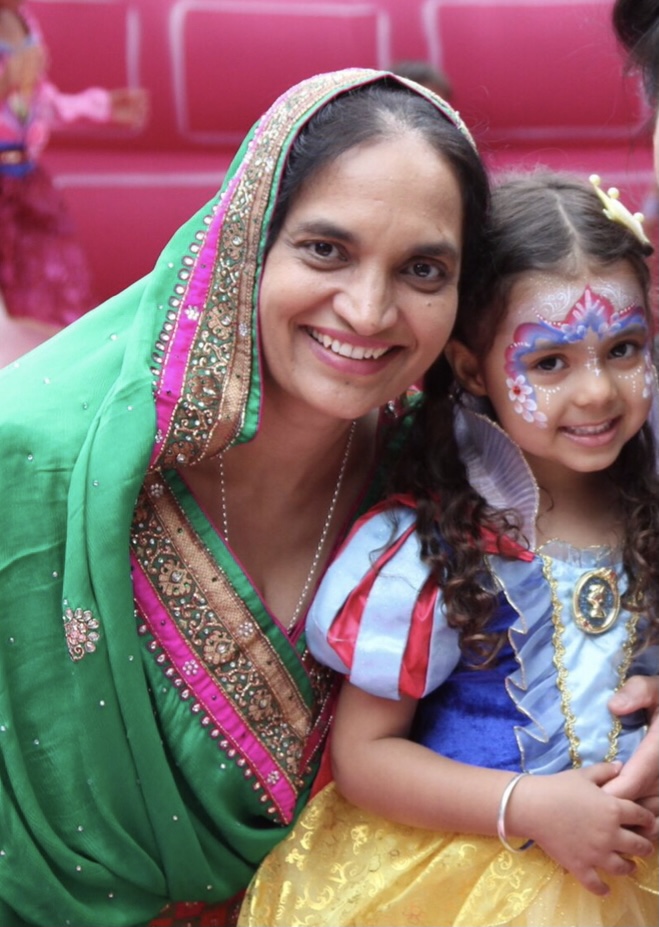
But we chose to carry on her legacy and the values she held so firmly around love, family and Seva. They are an anchor and a choice we make to honour her. I feel so deeply grateful to have her in my life, to have had that relationship and love is something I give thanks for everyday.