A visit to The Last Princesses of Punjab exhibition at Kensington Palace left me thinking about power, resistance and why the stories of South Asian women must never be allowed to disappear.
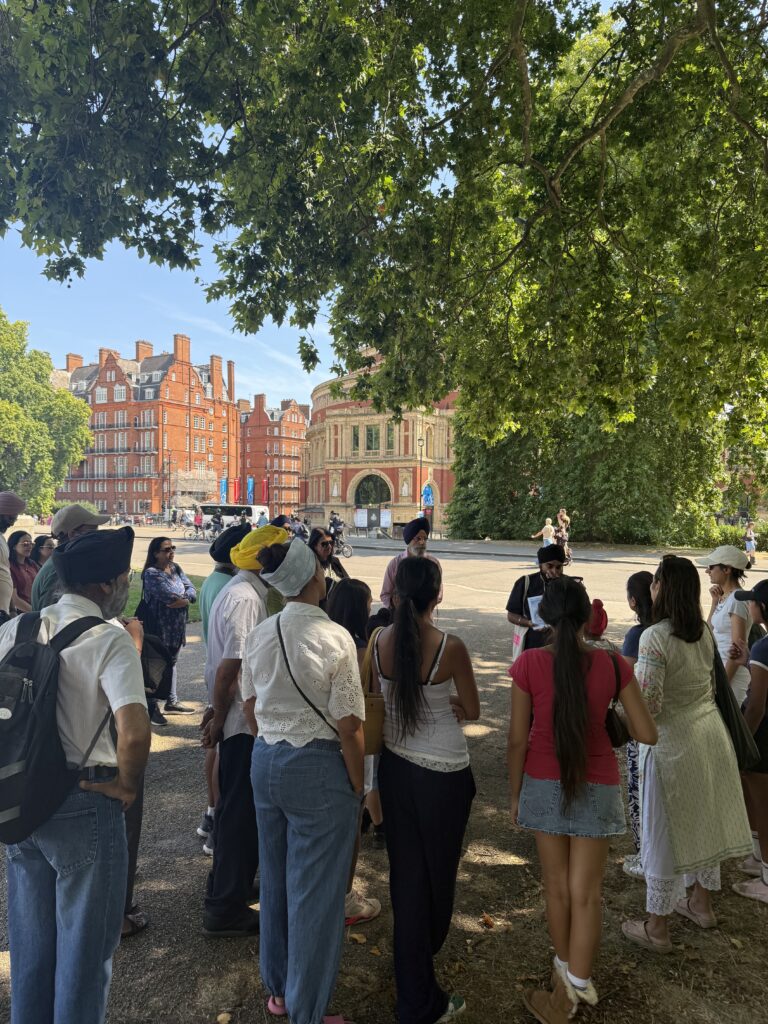
Last Saturday, I spent the afternoon on a walking history tour before visiting The Last Princesses of Punjab exhibition at Kensington Palace.
I went expecting to learn more about an extraordinary chapter of Sikh and British history. I left thinking deeply about one woman in particular.
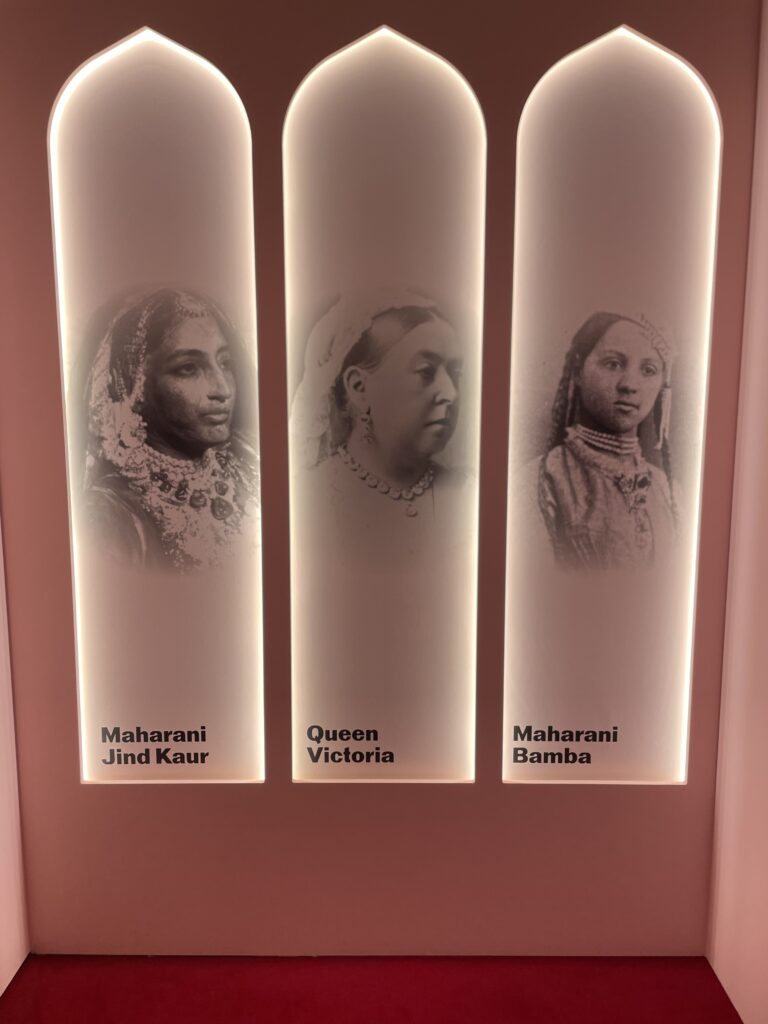
Maharani Jind Kaur.
Her story has stayed with menot only because of what she endured, but because of the strength, courage and political leadership she showed throughout her life.
Maharani Jind Kaur is often introduced as the mother of Maharaja Duleep Singh, the last Maharaja of the Sikh Empire. She was, of course, his mother. But when a woman’s identity is explained only through her relationship to a man, even when that man is her son, we risk overlooking the woman herself.
And Maharani Jind Kaur was so much more.
A queen and a political leader
Also known as Rani Jindan, Maharani Jind Kaur was the youngest wife of Maharaja Ranjit Singh, founder of the Sikh Empire. She would become its last Queen. Following his death and a period of instability, her son Duleep Singh became Maharaja in 1843 when he was just five years old.
Jind Kaur became Regent, governing on his behalf.
This was not a ceremonial role. She participated in matters of state, held court and fought to protect her young son’s position at a time of enormous political turmoil. She became a visible symbol of Sikh sovereignty and a formidable political force in her own right.
The British East India Company understood the power of her influence. Following the Anglo-Sikh Wars, as British control over Punjab increased, she was removed from power, imprisoned and forcibly separated from her son. Duleep Singh was eventually taken to Britain, and mother and child would spend more than a decade apart.
That detail alone is devastating.
It is easy to read history as a sequence of treaties, wars and changes of power. But behind those events were human lives. There was a mother whose child was taken from her. There was a young boy separated from his family, faith, culture and kingdom. And there was a woman whose refusal to quietly accept what was happening made her dangerous to an empire.
Even imprisonment did not end Jind Kaur’s resistance. She escaped and reached Nepal, where she lived in exile. She was not reunited with Duleep Singh until 1861, when they met in Calcutta after around 13 years apart. They later travelled to Britain together, and she spent the final years of her life close to her son.
Her story is one of leadership, loss, resistance and survival. Yet for many of us, it is a story we were never properly taught.
The women surrounding the history we know
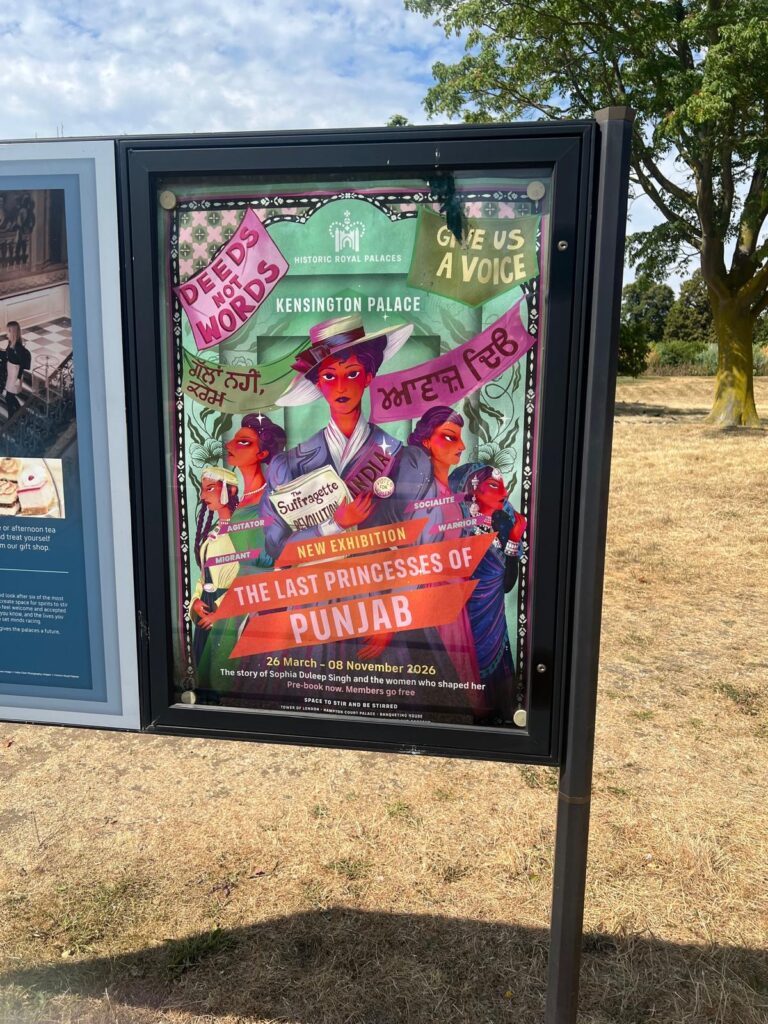
The Last Princesses of Punjab explores the life of Princess Sophia Duleep Singh and the women who shaped her: her sisters Catherine and Bamba, her mother Bamba Müller, her grandmother Jind Kaur and her godmother Queen Victoria.
These women lived very different lives, but each navigated questions of identity, power, belonging and resistance. Sophia became a prominent suffragette. Catherine supported Jewish refugees fleeing Nazi Germany. Princess Bamba worked to preserve her family’s Punjabi heritage and legacy.
Seeing their stories brought together is a reminder that women were never absent from history. They were leading, organising, resisting, protecting, campaigning and creating change.
Too often, they have simply been absent from the version of history most widely told.
That distinction matters.
When we say that women have been “forgotten”, it can sound accidental. But history is shaped by decisions: whose achievements are recorded, whose voices are treated as authoritative, whose portraits enter institutions and whose names appear in classrooms.
For South Asian women in particular, there is often a double erasure. Their stories can be marginalised within mainstream British history and then reduced again within accounts that centre kings, soldiers and male political figures.
Maharani Jind Kaur challenges that framing. She was not standing quietly at the edge of the story. She was at its centre.
Why visibility is about more than being seen
As the founder of Asian Women MEAN Business, I spend a great deal of time thinking about visibility: why so many brilliant South Asian women struggle to be seen, heard and recognised, and what it takes for us to claim space without waiting for permission.
Visiting this exhibition reminded me that visibility is not simply a modern personal-branding conversation. It is about power, memory and legacy.
Who gets remembered as a leader?
Whose ambition is celebrated, and whose is labelled difficult or dangerous?
Whose story is told in full, rather than as a footnote in somebody else’s?
These are not only historical questions. South Asian women today still encounter cultural conditioning that tells us to be modest, to avoid drawing attention to ourselves and to let our work speak for itself. In workplaces and businesses, we can be doing the work, creating the impact and carrying enormous responsibility—and still find that someone else receives the recognition.
This is why telling our stories matters.
Visibility is not vanity. It is how contribution becomes part of the record. It is how leadership is recognised. It is how the women coming after us learn what is possible.
When we recover the stories of women such as Maharani Jind Kaur, we are not adding women into history as an afterthought. We are telling a more truthful version of history.
The strength we have always carried
There was something especially powerful about encountering this Punjabi and Sikh history inside Kensington Palace—a place so closely associated with the British monarchy and Empire.
The setting asks us to hold different realities at once: royalty and dispossession, privilege and exile, belonging and displacement, silence and resistance.
It also reminds us that our history is not separate from British history. The stories of Punjab, the Sikh Empire, colonialism and migration are woven into the story of Britain itself.
For me, Maharani Jind Kaur’s life is a reminder that the courage we celebrate in South Asian women today did not appear from nowhere. We come from women who led in the most difficult circumstances. Women who protected their families and communities. Women who challenged systems far more powerful than themselves. Women whose strength survived even when their names did not receive the recognition they deserved.
Sometimes looking back reminds us just how much strength we have always carried forward.
And perhaps honouring that legacy means refusing to make ourselves smaller now.
It means telling the fuller story.
It means naming the women who came before us.
And it means ensuring that the South Asian women creating change today are seen, heard and remembered too.
Visit the exhibition
A huge thank you to A Little History of the Sikhs and Rav Singh for such an insightful walking tour and for bringing these stories to life with so much knowledge and care.
If you have the opportunity, I would highly recommend visiting The Last Princesses of Punjab at Kensington Palace. The exhibition runs until 8 November 2026 and is included with palace admission.
Go to learn about the princesses, but make time for the queen whose courage helped shape their legacy.